 Soil Dynamics
16 hours ago in Agriculture & Farming
Soil Dynamics
16 hours ago in Agriculture & Farming
High Authority Social Bookmarking Site for Australian SEO in 2026 - A2Bookmarks Australia
Welcome to A2Bookmarks Australia, your premier high-authority social bookmarking site designed for effortless content submission and visibility down under. Our platform offers a trusted, dedicated network for Australians to easily save, manage, and share their favorite web pages and URLs. As one of the most reliable Australian social bookmarking sites in 2026, we ensure your content stays relevant and indexed. Whether you're a business owner seeking to boost your local online visibility or an SEO professional needing quality link submission tools, A2Bookmarks is the solution. Instantly increase your brand authority and build meaningful Australian backlinks by submitting your content directly through our verified, active network. Connect with our community, utilize powerful bookmarking tools, and boost your digital presence with confidence. Optimize your content reach and SEO performance with targeted social bookmarking tailored for Australian audiences. Start submitting your links today!
Spring Vegetable Fertiliser Guide for Australian Gardens soildynamics.com.au
Soil Dynamics
16 hours ago in Agriculture & Farming
Spring Vegetable Fertiliser Guide for Australian Gardens
Spring is one of the busiest times in an Australian vegetable garden. As temperatures rise and daylight increases, gardeners start planting leafy greens, herbs, tomatoes, cucumbers, beans, capsicums, zucchini and other warm-season crops.
But planting is only the beginning. Your vegetables also need the right growing conditions, including healthy soil, moisture, sunlight and an appropriate source of nutrients.
So, what is the best spring fertiliser for vegetables in Australia?
The answer depends on what you have planted, where it is growing and how your soil is performing. Leafy vegetables, fruiting crops and container-grown plants can have different nutrient needs. You also need to decide whether a liquid fertiliser or a slow-release product is the better fit for your garden.
This guide explains how to approach spring fertiliser for vegetables in Australia without relying on a one-size-fits-all feeding schedule.
What changes in your vegetable garden during spring?
Spring brings changing temperatures, longer days and increasing plant growth across much of Australia.
For vegetables, this often means a transition from relatively slow winter growth into a period of active root, leaf, flower and fruit development.
Before adding fertiliser, consider:
- What vegetable have you planted?
- Is it a leafy, root or fruiting crop?
- Is it growing in a garden bed or container?
- What did you add to the soil before planting?
- Is the plant showing healthy growth?
- What does the fertiliser label recommend?
- Does the soil need improvement as well as nutrients?
Fertiliser supplies nutrients, but it does not replace good soil preparation.
For this reason, a useful spring feeding strategy starts with matching the fertiliser to the crop and growing conditions, rather than automatically applying the same product and rate to every vegetable.
What is the best spring fertiliser for vegetables in Australia?
There is no single fertiliser that is automatically the best choice for every spring vegetable.
Different vegetables have different growth patterns, while Australian gardens can range from sandy coastal soils to heavy clay and organically rich garden beds.
A practical approach is to consider three things:
- The crop: Are you growing leafy greens, roots or fruiting vegetables?
- The growing environment: Are the plants in containers, raised beds or directly in the ground?
- The fertiliser format: Would a liquid fertiliser or a slow-release product be more suitable for your gardening routine?
Soil condition also matters. A productive vegetable garden is not simply about adding more fertiliser. Healthy soil provides the foundation in which plant roots can access water, air and nutrients.
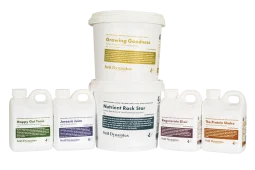
For gardeners looking for organic options, Soil Dynamics provides a range of soil and plant inputs designed to support different stages of garden growth.
Should I use liquid or slow-release fertiliser on spring vegetables?
One of the most common questions gardeners ask is whether they should choose liquid fertiliser or slow-release fertiliser.
Both approaches can have a place in a vegetable garden, but they work differently.
Liquid fertiliser
Liquid fertilisers are mixed according to the product label and applied to the garden or plants as directed.
They can be useful when you want to incorporate feeding into your regular watering routine. Liquid products are also convenient when plants are actively growing and you want a straightforward way to provide nutrients.
However, the application rate and frequency should always come from the specific product label.
Do not assume that the same dilution is suitable for every liquid fertiliser.
Slow-release fertiliser
Slow-release fertilisers are designed to make nutrients available over a longer period rather than providing them through repeated liquid applications.
They can be convenient for gardeners who prefer a lower-maintenance approach.
However, the release pattern can depend on the product and environmental conditions. Always follow the manufacturer’s directions for application rate, placement and timing.
Liquid vs slow-release: which should you choose?
Instead of asking which format is universally better, consider what suits your garden.
| Garden situation | Option to consider |
| You prefer feeding alongside regular garden care | Liquid fertiliser |
| You want a longer-term feeding approach | Slow-release fertiliser |
| Plants are actively growing and need attention | Liquid may be convenient |
| You want fewer feeding applications | Slow-release may suit your routine |
| You are growing in containers | Check the product label carefully |
| You are unsure of the rate | Follow the specific product label |
The important point is that fertiliser type and application rate should be based on the individual product instructions.
Spring fertiliser for leafy vegetables
Leafy vegetables include crops such as:
- Lettuce
- Spinach
- Silverbeet
- Kale
- Asian greens
- Rocket
- Mustard greens
For these crops, gardeners are generally interested in healthy vegetative growth because the leaves are the main harvest.
Rather than automatically applying a heavy feeding program, consider the condition of the soil before planting.
If the garden bed has already been enriched with suitable organic matter or fertiliser, additional feeding may not be immediately necessary.
For established plants, monitor growth and follow the fertiliser label when additional feeding is appropriate.
A simple approach for leafy greens
Before planting: Prepare the soil and incorporate suitable amendments according to their instructions.
After planting: Give the seedlings suitable moisture and time to establish.
During active growth: Monitor plant performance and apply your chosen fertiliser according to its label.
Avoid: Increasing the application rate simply because the plants appear to be growing slowly. Poor growth can have other causes, including insufficient sunlight, water stress, unsuitable soil conditions or temperature.
Spring fertiliser for tomatoes and other fruiting vegetables
Spring is also the time when many Australian gardeners plant warm-season vegetables such as:
- Tomatoes
- Capsicums
- Chillies
- Cucumbers
- Zucchini
- Pumpkins
- Eggplants
- Beans
These crops move through different stages of growth. They first establish roots and foliage before producing flowers and, eventually, fruit.
That means feeding should be considered alongside the plant’s development stage rather than treating every crop exactly the same.
For newly planted seedlings, focus first on establishment.
Once plants are actively growing, follow the instructions of the fertiliser you have selected.
What about flowering and fruiting?
When a vegetable plant begins flowering, gardeners often assume that they should immediately increase fertiliser.
That is not necessarily the right approach.
Before changing your feeding routine, check:
- The fertiliser’s intended use
- Its label directions
- The condition of the plant
- Soil moisture
- Sunlight
- Root development
- Whether the plant is already receiving nutrients from the soil
A plant producing flowers and fruit needs appropriate growing conditions, but more fertiliser does not automatically mean more vegetables.
What about root vegetables?
Root crops such as carrots, beetroot and radishes have a different growth pattern because the harvested portion develops below the soil surface.
For these vegetables, soil preparation is particularly important.
Compacted or poorly structured soil can make it difficult for roots to develop properly.
Before reaching for fertiliser, consider whether the growing bed provides:
- Good soil structure
- Adequate moisture
- Suitable drainage
- Enough space for root development
- Appropriate organic matter
If additional fertiliser is needed, follow the product label rather than applying a generic vegetable feeding rate.
Fertilising spring vegetables in containers
Growing vegetables in pots, tubs and other containers is popular across Australia, particularly where garden space is limited.
However, container-grown vegetables need a slightly different approach to garden beds.
A container contains a relatively small volume of growing media, and watering can affect nutrient availability.
Common container vegetables include:
- Tomatoes
- Chillies
- Herbs
- Lettuce
- Strawberries
- Cucumbers
- Compact beans
Should container vegetables be fertilised?
They may need additional nutrients depending on the growing medium, crop and fertiliser being used.
However, do not automatically use the same application approach as you would in an in-ground garden.
Check the product label for container-specific directions.
It is also important to consider drainage. If a container stays excessively wet, poor plant growth may be caused by root-zone conditions rather than a lack of fertiliser.
Fertilising in-ground spring vegetables
In-ground gardens usually contain a larger volume of soil than containers, but soil condition can vary considerably.
Before fertilising, look at the history of the garden bed.
Ask yourself:
- Was compost or organic matter added?
- Was the bed recently fertilised?
- Has the same area been used for vegetables previously?
- Does the soil drain well?
- Are the plants growing normally?
- Has the soil been compacted?
A soil-focused approach can be more useful than simply adding fertiliser whenever growth appears slow.
The aim is to create an environment where plants can access the nutrients, water and air they need.
Should I fertilise immediately after planting spring vegetables?
Not necessarily.
A newly planted vegetable seedling needs time to establish its root system.
Whether additional fertiliser is appropriate immediately after planting depends on:
- The condition of the soil
- What was added during soil preparation
- The crop
- The fertiliser product
- The product’s label instructions
If the planting area has already been prepared with nutrients, adding more fertiliser immediately may not be necessary.
Instead, establish the plant, maintain appropriate moisture and monitor its growth.
Then follow the recommended feeding instructions for the product you are using.
The spring feed that matches what you just planted
A simple way to think about spring fertilising is to start with the vegetable rather than the fertiliser.
If you planted leafy greens
Think about supporting healthy leaf growth and maintaining suitable soil conditions.
If you planted tomatoes, capsicums or eggplants
Think about the plant’s development from establishment through flowering and fruit production.
If you planted cucumbers, zucchini or pumpkins
Monitor vigorous growth, moisture and soil condition while following the fertiliser label.
If you planted carrots or other root crops
Prioritise suitable soil structure and root development.
If you planted vegetables in containers
Check the fertiliser instructions specifically for container use and consider how frequently the container is watered.
The right feeding approach is therefore crop-specific rather than one-size-fits-all.
How much spring fertiliser should you use?
This is where gardeners should avoid relying on generic internet feeding schedules.
There is no universal application rate that applies to every fertiliser.
Different products have different concentrations, ingredients, application methods and intended uses.
For that reason:
Always use the application rate and frequency stated on the product label.
If the label gives separate instructions for different crops or application methods, use the direction that applies to your situation.
More fertiliser is not necessarily better. Over-application can waste product and may create problems for plants and the surrounding soil.
Common spring fertilising mistakes
1. Using the same fertiliser rate for every vegetable
Tomatoes, lettuce, carrots and container herbs do not necessarily require the same approach.
Start with the crop and follow the selected product’s directions.
2. Adding fertiliser whenever growth looks slow
Slow growth does not always mean a nutrient deficiency.
Check water, sunlight, temperature, soil structure and other growing conditions first.
3. Applying more because you want faster growth
Increasing the amount beyond the label recommendation is not a shortcut to a healthier vegetable garden.
Stick to the manufacturer’s instructions.
4. Ignoring the soil
Fertiliser is only one part of productive gardening.
Soil structure, organic matter, moisture and biological activity all contribute to the growing environment.
5. Treating containers and garden beds exactly the same
Container growing conditions differ from in-ground gardens.
Always check the product directions for the growing situation.
How to build a spring vegetable feeding routine
A simple routine can help you avoid overfeeding.
Step 1: Identify the crop
Determine whether you are growing leafy, root or fruiting vegetables.
Step 2: Check the soil
Look at moisture, drainage, structure and what you added before planting.
Step 3: Check the plant’s growth stage
A newly planted seedling has different priorities from an established flowering or fruiting plant.
Step 4: Choose your fertiliser format
Decide whether a liquid or slow-release product better fits your garden and maintenance routine.
Step 5: Read the label
Check the recommended application method, rate and frequency.
Step 6: Monitor the plants
Look at overall growth rather than assuming that more fertiliser is always needed.
This approach keeps spring feeding practical while reducing the temptation to follow a generic fertiliser calendar.
Organic fertiliser for Australian vegetable gardens
Organic fertilisers can be part of a broader soil-focused approach to vegetable gardening.
Instead of thinking only about feeding individual plants, gardeners can consider the condition of the soil and how different inputs fit into their overall gardening system.
Soil Dynamics offers a range of organic gardening products, including liquid inputs and soil-focused products.
When choosing a product, check its intended use and follow the application instructions provided by the manufacturer.
Final thoughts: Match the feed to the crop
Spring is an exciting time for Australian vegetable gardeners, but fertilising does not need to be complicated.
The most useful starting point is simple: look at what you have planted, understand your soil and choose a fertiliser that fits your gardening system.
Leafy greens, root vegetables and fruiting crops can have different needs. Likewise, vegetables growing in containers may need a different approach from those growing directly in the ground.
Whether you choose a liquid fertiliser or a slow-release option, follow the product label rather than relying on a generic NPK schedule.
The goal is not simply to add more fertiliser. It is to create healthy growing conditions that help your spring vegetables establish, grow and produce a harvest.
For gardeners looking for organic fertiliser and soil-focused products, explore the Soil Dynamics range and choose the product that matches your garden’s needs.
Explore Soil Dynamics organic gardening products
Frequently Asked Questions
What is the best fertiliser for spring vegetables in Australia?
There is no single best fertiliser for every spring vegetable. The appropriate choice depends on the crop, soil condition, growing environment and fertiliser product. Consider whether a liquid or slow-release product suits your garden and always follow the product label.
Should I use liquid or slow-release fertiliser on spring vegetables?
Both can be useful, depending on your garden and preferred feeding routine. Liquid fertilisers can be convenient for regular applications, while slow-release products can provide a longer-term feeding approach. Follow the specific product instructions for application rates and frequency.
When should I fertilise vegetables in spring?
The timing depends on the crop, soil preparation and fertiliser product. Newly planted vegetables may not need immediate additional fertiliser if the soil has already been prepared. Check the product label and consider the plant’s stage of growth.
How often should I fertilise spring vegetables?
There is no universal schedule for all fertilisers. Application frequency varies between products. Follow the label instructions for the specific fertiliser you are using rather than relying on a generic schedule.
Can I use the same fertiliser for all my vegetables?
A product may be suitable for multiple vegetable crops, but that does not mean every crop requires the same application rate or frequency. Always check the product label and consider the crop and growing environment.
Should I fertilise vegetables grown in pots?
Container-grown vegetables may require additional feeding depending on the growing medium, crop and fertiliser. Because containers have different growing conditions from garden beds, check the product label for container-specific instructions.
Should I fertilise immediately after planting seedlings?
Not necessarily. If the soil has already been prepared with suitable nutrients, additional fertiliser may not be required immediately. Allow seedlings to establish and follow the directions for your chosen fertiliser.
What should I feed tomatoes in spring?
Tomatoes need suitable conditions for root, leaf, flower and fruit development. Rather than following a generic feeding schedule, choose a suitable fertiliser and follow its label directions throughout the plant’s growth stages.
Is more fertiliser better for vegetables?
No. Applying more than the recommended amount is not a reliable way to produce healthier or faster-growing vegetables. Always follow the manufacturer’s application instructions.
voters
Report Story 
Related Stories



Recent Stories