
A2Bookmarks Australia Social Bookmarking Website
Welcome to A2Bookmarks Australia, your premier destination for effortless social bookmarking down under. Our platform is designed to help Australians easily save, manage, and share their favorite web pages and URLs. Whether you’re a business owner looking to enhance your online visibility across Australia or an individual wanting to organize your go-to websites, A2Bookmarks Australia provides a streamlined and user-friendly solution. Connect with our Australian community, utilize powerful bookmarking tools, and boost your digital presence with confidence. Dive in today and transform the way you bookmark and share online content!

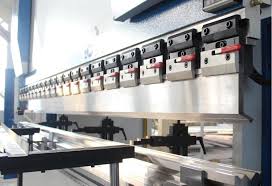
How much do CNC operators make in Australia? medium.com

Ever wondered what a CNC operator in Australia actually earns? Whether you’re eyeing a career switch, hiring for your shop, or just curious about the trade, here’s the quick scoop: CNC operators in Australia typically earn between $60,000 and $95,000 per year, with the figure climbing based on experience, location, and specialisations. In short: it pays better than you’d think, and demand is quietly booming.
Let’s dig in.
What is a CNC operator and what do they actually do?
A CNC (Computer Numerical Control) operator is the person who keeps modern manufacturing humming. These operators run computer-controlled machinery that cuts, drills, grinds, and shapes metal or plastic into precise components. Think engine parts, surgical instruments, aircraft fittings—precision is non-negotiable.
It’s not just about pushing buttons either. A solid CNC operator understands machine programming, reads technical drawings, calibrates tools, and keeps a close eye on quality control.
And anyone who’s spent time on a factory floor knows—it’s a role where one mistake can cost thousands.
How much do CNC operators earn across Australia?
Now to the money. Here’s a breakdown by experience level and location:
Average Salary by Experience
| Experience Level | Average Annual Salary |
|---|---|
| Entry-level (0–2 yrs) | $55,000 – $65,000 |
| Mid-level (3–5 yrs) | $65,000 – $80,000 |
| Experienced (5+ yrs) | $80,000 – $95,000+ |
That top end can creep over $100k in niche industries like aerospace or defence, where precision tolerances and material handling are more complex.
By Location
-
Melbourne & Sydney: Highest-paying hubs, averaging $75k–$95k
-
Perth: Often higher due to mining/industrial manufacturing, around $80k–$100k
-
Regional areas: Slightly lower base, but offset by demand and lower living costs
CNC operators with extra skills—like CAM programming, multi-axis experience, or maintenance troubleshooting—tend to attract top dollar.
Are CNC operators in demand in Australia?
Absolutely. And it’s not just in the big cities.
Australia’s advanced manufacturing sector is picking up pace, and the recent push for local production (hello, supply chain disruptions) means more factories are investing in precision machinery—and the people to run them.
Plus, fewer young people are learning trades. That scarcity boosts pay for skilled CNC operators. Shops are increasingly offering perks like shift flexibility, training programs, and even relocation bonuses just to attract experienced hands.
What qualifications or skills boost your CNC salary?
This isn’t a “show up and earn big” gig—you’ve got to bring skills to the table.
Here’s what typically adds value to your paycheck:
-
Cert III in Engineering – Mechanical Trade (Fitting/Machining): The standard entry-point
-
CAM programming skills: Knowing how to code in Mastercam or Fusion 360 gives you a serious edge
-
Multi-axis and lathe experience: These machines demand more expertise, so shops pay more
-
Quality control know-how: Being able to measure down to microns using CMMs or micrometers makes you indispensable
-
Autonomy: Operators who can handle setups, programming, and diagnostics without hand-holding are gold
Those who stay current with software updates and machine trends often find themselves pulled into supervisory or technical specialist roles—both of which bring a hefty salary bump.
Real talk: is it worth getting into CNC machining?
Honestly, yes—if you’re the kind of person who likes working with your hands, enjoys tech, and doesn’t mind a bit of grit.
One Brisbane-based operator I interviewed put it this way:
“You start out sweeping chips, but if you’ve got a brain and patience, you’ll be programming $250k machines by your second year.”
That’s the kind of trajectory not every trade can promise.
Plus, in Australia, manufacturing is making a quiet comeback. Government incentives, local production boosts, and a shift away from overseas suppliers have created what economists call a “skills premium.” Put simply: if you’ve got CNC skills, you’re valuable.
Are there any downsides?
Look, it’s not all shiny new tools and smoko breaks.
-
The work can be physically taxing—especially on long shifts
-
Precision means pressure: botched parts can be costly
-
Entry pay isn’t stellar, but it ramps up quickly
-
Night shifts and noisy workshops can wear thin over time
But those who stick with it say the trade-off’s worth it—especially once you get to the point where you’re running your own shifts or training new hires.
What’s the career path beyond just operating?
CNC operators who keep learning rarely stay just operators.
Here’s where many go next:
-
CNC Programmer – Writing the G-code or CAM files that run machines
-
Workshop Supervisor or Team Lead – Managing staff, production timelines, and QC
-
Maintenance Tech – Specialising in keeping the machines running
-
Tooling Designer or CAD/CAM Engineer – Creating the actual component models and tooling plans
-
Business owner – Quite a few machinists eventually start their own jobbing shops
Some even transition into engineering or product design roles—taking their hands-on insight into the design phase.
Quick FAQ
Q: Do CNC operators need a university degree in Australia?
Nope. Most come through TAFE with a Cert III in Engineering or similar.
Q: Can you earn six figures as a CNC operator?
Yes—especially with experience, specialisation, or by moving into programming or supervision.
Q: Is there job security?
Yes. The manufacturing sector’s growth, paired with a shortage of skilled tradies, has made CNC roles relatively secure.
In an age of digital everything, it’s easy to forget that someone still has to shape the steel, drill the holes, and mill the components that power everything from planes to prosthetics.
And in Australia, those folks—the CNC operators—are making a solid living doing just that.
If you’re curious how these figures stack up to more detailed breakdowns, this look at CNC machining pay across Australia offers a deeper dive worth a read.
For broader context on where skilled trades are heading, check out the Jobs and Skills Australia snapshot—it’s got some telling stats.
And hey, anyone who’s ever tried to hold a 0.01mm tolerance on a greasy Monday morning knows—this job? It ain’t for rookies.
voters
Report Story 
Related Stories
-
Alkoxy Silicone Oil Market Expansion Strategies & Global Impact 2025

-
Next-Gen Uncoated Woodfree Offset Paper Market : Leading Companies &...
-
How to Remove Black Magic: Effective Spiritual Cleansing and Protection...

-
Role of Love Marriage Specialist Astrologer to Solve Intercaste Love...

-
How Retrograde Jupiter Shapes Your Destiny and Beliefs

-
Do small businesses like laundromats accept tap-to-pay?
-
How does Termina ensure businesses always stay on the cheapest...

-
What role does an energy broker play in helping SMEs...
-
Coffee and Clean Clothes: The Trend of Hybrid Laundromats in...
-
Can you make money investing in energy?



Recent Stories
-

Alkoxy Silicone Oil Market Expansion Strategies & Global Impact 2025 24chemicalresearch.com
-
Next-Gen Uncoated Woodfree Offset Paper Market : Leading Companies &... 24chemicalresearch.com
-

How to Remove Black Magic: Effective Spiritual Cleansing and Protection... smart-article.com
-

Role of Love Marriage Specialist Astrologer to Solve Intercaste Love... rankseoarticle.com
-

How Retrograde Jupiter Shapes Your Destiny and Beliefs theseobacklink.com
Popular Stories
-
Alkoxy Silicone Oil Market Expansion Strategies & Global Impact 2025 24chemicalresearch.com
-
Next-Gen Uncoated Woodfree Offset Paper Market : Leading Companies &... 24chemicalresearch.com
-
How to Remove Black Magic: Effective Spiritual Cleansing and Protection... smart-article.com
-
Role of Love Marriage Specialist Astrologer to Solve Intercaste Love... rankseoarticle.com
-
How Retrograde Jupiter Shapes Your Destiny and Beliefs theseobacklink.com