 Krish Joy
8 months ago in Business Services
Krish Joy
8 months ago in Business Services
High Authority Social Bookmarking Site for Australian SEO in 2026 - A2Bookmarks Australia
Welcome to A2Bookmarks Australia, your premier high-authority social bookmarking site designed for effortless content submission and visibility down under. Our platform offers a trusted, dedicated network for Australians to easily save, manage, and share their favorite web pages and URLs. As one of the most reliable Australian social bookmarking sites in 2026, we ensure your content stays relevant and indexed. Whether you're a business owner seeking to boost your local online visibility or an SEO professional needing quality link submission tools, A2Bookmarks is the solution. Instantly increase your brand authority and build meaningful Australian backlinks by submitting your content directly through our verified, active network. Connect with our community, utilize powerful bookmarking tools, and boost your digital presence with confidence. Optimize your content reach and SEO performance with targeted social bookmarking tailored for Australian audiences. Start submitting your links today!
The Role of Junior Sports in Building Lifelong Healthy Habits issuu.com
Krish Joy
8 months ago in Business Services
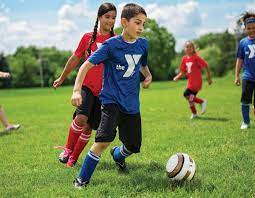
Kids who play sport don’t just get fitter — they quietly build habits that stick for life.
That’s the short answer. Regular movement, shared routines, and early wins wire physical activity into a child’s identity. Years later, those kids are more likely to stay active, manage stress better, and see exercise as normal rather than a chore.
Anyone who’s coached, parented, or stood on a freezing sideline on a Saturday morning has seen it happen in real time.
Why do early sports experiences matter so much?
Junior sport works because it catches kids at the exact moment habits are forming.
Between the ages of about five and twelve, children are learning what “people like me” do. Behavioural scientists call this identity-based habit formation. Once something feels like part of who you are, you stop debating it.
That’s why early sports exposure often leads to:
-
A default belief that movement is normal
-
Greater confidence trying new physical activities later
-
Less resistance to exercise during teenage years
-
Stronger emotional ties to teamwork and routine
This is consistency bias at work. When kids show up week after week, their brain locks in a simple rule: This is what we do.
How does sport help children enjoy movement (not resent it)?
Enjoyment beats discipline every time.
One mistake adults make is framing exercise as something you should do. Junior sport flips that script. Movement becomes play, social connection, and achievement — all powerful dopamine triggers.
Think about it:
-
Running is chasing a mate
-
Strength is climbing, tackling, jumping
-
Endurance is finishing a game together
That positive framing matters. According to behavioural research summarised by the World Health Organization, children who associate physical activity with enjoyment are more likely to meet activity guidelines into adulthood .
Fun creates liking. And liking drives repetition.
What life skills do kids learn through junior sport?
Fitness is only part of the story.
Junior sport is a compressed life simulator. Kids practice effort, failure, recovery, and improvement — all inside a low-risk environment.
Over time, they learn:
-
How to commit even when motivation dips
-
How to handle losing without quitting
-
How to follow structure and rules
-
How to work within a group
These skills transfer directly into adult health behaviours. Someone who’s learned to train for a season understands delayed rewards. That same mindset later supports gym routines, rehab programs, or returning to exercise after a break.
That’s commitment and consistency doing the heavy lifting.
Does early sport really influence adult health outcomes?
Short answer: yes, but not because kids become elite athletes.
Long-term studies consistently show that adults who were active as children are more likely to:
-
Maintain a healthy weight
-
Engage in regular physical activity
-
Experience lower rates of lifestyle-related disease
-
Report higher wellbeing linked to movement
The mechanism isn’t talent. It’s familiarity.
When exercise feels unfamiliar, the brain treats it as effort. When it feels familiar, it becomes default behaviour. Junior sport reduces the mental friction that stops many adults from starting.
Anyone who’s tried to “get fit” from scratch at 35 knows how real that friction is.
What role do parents and coaches actually play?
Here’s where many programs quietly succeed — or fail.
Children don’t copy what adults say. They copy what adults model.
Effective junior sports environments share a few traits:
-
Adults praise effort over outcome
-
Mistakes are treated as part of learning
-
Attendance is encouraged, not pressured
-
Fun is protected, even when competition rises
This taps into social proof. When kids see peers turning up, parents cheering respectfully, and coaches valuing progress, participation feels safe.
That sense of belonging keeps kids engaged far longer than trophies ever could.
Why variety matters more than specialisation
Early specialisation sounds productive. In reality, it often shortens sporting lives.
Kids exposed to multiple sports develop:
-
Broader movement skills
-
Lower injury risk
-
Greater confidence trying new activities later
More importantly, variety keeps curiosity alive. When one sport loses appeal, another can take its place — without breaking the habit of being active.
From a behavioural lens, this protects against loss aversion. Kids don’t feel like quitting sport altogether just because one experience disappoints them.
Can junior sport support mental health too?
Absolutely — and often quietly.
Regular sport participation gives kids:
-
Predictable routines
-
Social connection outside school
-
Physical outlets for stress and emotion
-
Safe spaces to build confidence
These factors combine to create emotional resilience. Physical activity becomes a coping mechanism rather than a punishment.
Many adults who still run, swim, or play social sport aren’t chasing fitness. They’re chasing how movement helps them think.
That pattern usually starts young.
Common questions parents ask
What if my child isn’t “sporty”?
That label usually reflects environment, not ability. Non-competitive, skill-building programs often unlock confidence in kids who struggled elsewhere.
How many days a week is enough?
Even one or two structured sessions a week can create lasting habits when enjoyment and consistency are present.
Is it okay to let kids quit?
Yes — with reflection. Quitting a specific sport is different from quitting movement altogether. The goal is continuity, not perfection.
The quiet long-term payoff
Junior sport isn’t really about winning games or producing champions.
It’s about teaching kids that movement belongs in their life — during busy weeks, tough seasons, and ordinary days. When that lesson sticks, health stops being a short-term goal and starts becoming part of identity.
That’s why well-designed Junior sports programs matter. They don’t just fill afternoons; they shape defaults. And those defaults tend to last long after the jerseys no longer fit.
voters
Report Story 
Related Stories











Recent Stories