 kristin jhone
1 year ago in Business Services
kristin jhone
1 year ago in Business Services
High Authority Social Bookmarking Site for Australian SEO in 2026 - A2Bookmarks Australia
Welcome to A2Bookmarks Australia, your premier high-authority social bookmarking site designed for effortless content submission and visibility down under. Our platform offers a trusted, dedicated network for Australians to easily save, manage, and share their favorite web pages and URLs. As one of the most reliable Australian social bookmarking sites in 2026, we ensure your content stays relevant and indexed. Whether you're a business owner seeking to boost your local online visibility or an SEO professional needing quality link submission tools, A2Bookmarks is the solution. Instantly increase your brand authority and build meaningful Australian backlinks by submitting your content directly through our verified, active network. Connect with our community, utilize powerful bookmarking tools, and boost your digital presence with confidence. Optimize your content reach and SEO performance with targeted social bookmarking tailored for Australian audiences. Start submitting your links today!
The Ultimate Guide to Becoming an Expert Teacher of Competitive Strokes austswim.com.au
kristin jhone
1 year ago in Business Services
Have you ever watched elite swimmers glide effortlessly through the water and wondered what it takes to master those techniques? Becoming an expert teacher of competitive strokes is about more than just understanding the basics—it’s about refining technique, enhancing endurance, and helping swimmers reach peak performance.
Whether you’re an experienced swim coach or looking to specialize in competitive swimming instruction, this guide will provide the knowledge, strategies, and skills needed to train swimmers for success.
Why Specialize in Teaching Competitive Strokes?
Competitive swimming is a sport of precision. A fraction of a second can determine the difference between winning and losing. Specializing in teaching competitive strokes allows you to:
Make a Lasting Impact – Help swimmers develop skills that can shape their athletic careers.
Stay in Demand – Competitive swim coaches and stroke specialists are highly sought after at swim clubs, schools, and elite training centers.
Continuously Improve – The science of swimming is always evolving, offering endless opportunities for learning and growth.
Engage in a Competitive Environment – If you love the thrill of competition, coaching competitive swimmers keeps you immersed in the sport.
Breaking Down the Four Competitive Strokes
Competitive swimming consists of four key strokes, each requiring precise technique and strategic coaching.
1. Freestyle (Front Crawl)
Key Technique Elements:
- High elbow recovery for efficient arm movement
- Steady flutter kick for propulsion
- Proper breathing technique to reduce drag
Coaching Tip: Encourage bilateral breathing to promote balance and symmetry in stroke mechanics.
2. Backstroke
Key Technique Elements:
- A streamlined body position with a slight body roll
- Continuous flutter kick to maintain momentum
- Straight-arm recovery and strong underwater pull
Coaching Tip: Teach swimmers to maintain a consistent head position to minimize resistance and maximize speed.
3. Breaststroke
Key Technique Elements:
- Powerful yet efficient kick (frog kick)
- Glide phase to maximize efficiency
- Proper timing between arm stroke and kick
Coaching Tip: Encourage swimmers to engage their core for better body alignment and stroke fluidity.
4. Butterfly
Key Technique Elements:
- Strong dolphin kick to drive movement
- Simultaneous arm recovery above the water
- Proper breathing technique to avoid disrupting rhythm
Coaching Tip: Break the stroke into separate drills (kicking, arm movements, timing) before combining them for a full stroke.
Essential Skills of an Expert Competitive Strokes Teacher
Being a top-tier swim coach requires more than technical knowledge. Here are some key skills that set expert teachers apart:
Keen Eye for Detail – Identifying minor stroke inefficiencies can lead to significant performance improvements.
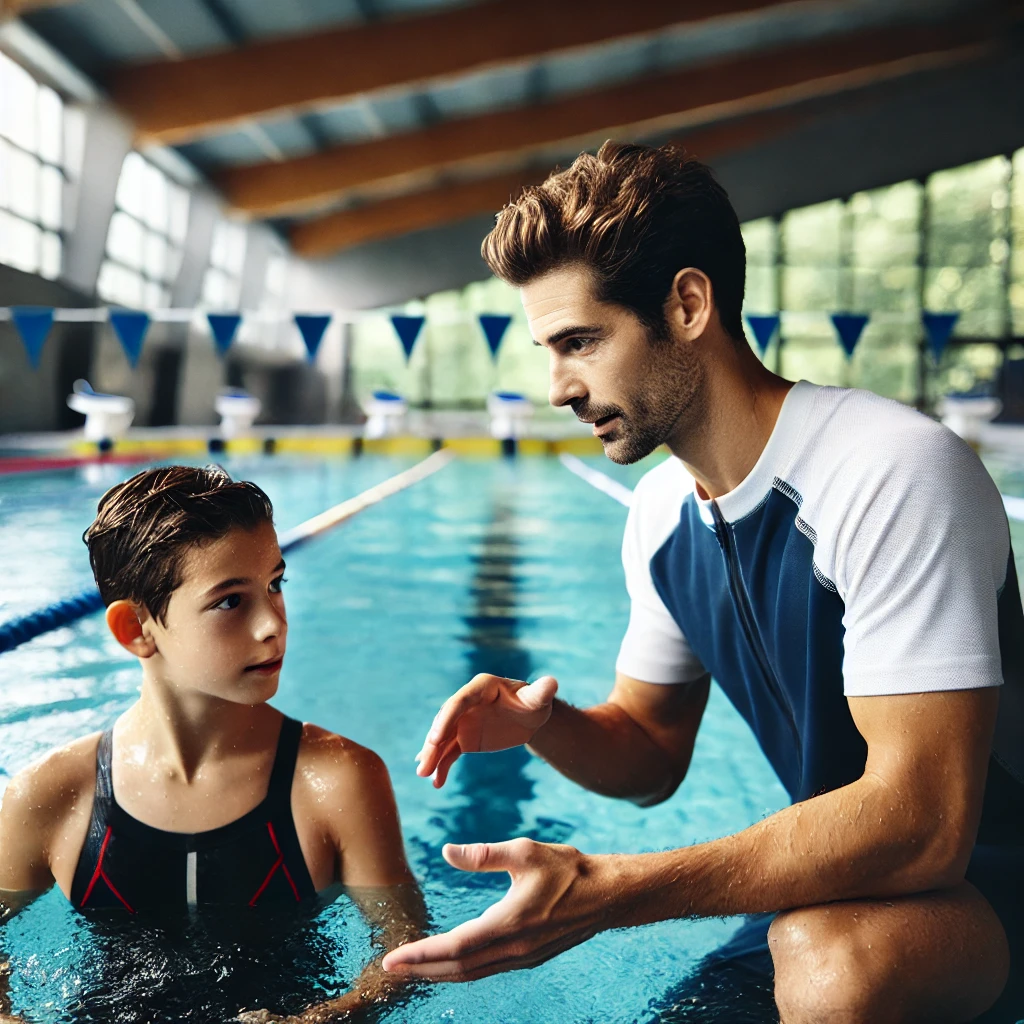
Effective Communication – Explaining techniques clearly and concisely is key to effective coaching.
Patience & Motivation – Not all swimmers progress at the same pace; encouragement and tailored coaching are crucial.
Knowledge of Biomechanics & Hydrodynamics – Understanding how the body moves through water helps optimize performance.
Experience in Training Programs – Structuring workouts that include drills, endurance training, and race simulations ensures well-rounded development.
Coaching Strategies for Competitive Swimmers
1. Use Video Analysis
Recording a swimmer’s strokes underwater allows for in-depth analysis of technique flaws and areas for improvement.
2. Implement Drill-Based Training
Breaking strokes into segments and focusing on isolated movements (e.g., sculling for better water feel, catch-up drill for arm coordination) helps refine technique.
3. Focus on Starts & Turns
Race efficiency isn’t just about the stroke—explosive starts and quick turns are game-changers. Work on streamlining off the wall and maintaining momentum.
4. Build Endurance and Speed
A combination of aerobic (long-distance sets) and anaerobic (sprint sets) training develops a swimmer’s ability to sustain speed.
5. Mental Training & Visualization
Elite swimmers use mental strategies such as goal setting and visualization techniques to prepare for races. Teach swimmers how to stay focused under pressure.
Common Challenges & How to Overcome Them
Challenge: Swimmers Struggling with Stroke Efficiency
Solution: Use resistance tools like paddles and drag suits to build strength and reinforce proper technique.
Challenge: Poor Breathing Techniques
Solution: Encourage controlled exhalation underwater and implement breath-control drills.
Challenge: Fatigue in Longer Races
Solution: Work on pacing strategies and incorporate endurance training into practice sessions.
Tips for Success as a Competitive Strokes Coach
Stay Updated with Latest Techniques – Attend coaching clinics, study elite swimmers, and network with experienced coaches.
Provide Personalized Feedback – Adapt coaching methods to each athlete’s strengths and weaknesses.
Encourage Consistency – Improvement comes with repetition; ensure swimmers follow structured training plans.
Incorporate Dryland Training – Strength and flexibility exercises improve stroke power and prevent injuries.
Conclusion: Take Your Coaching to the Next Level
Becoming an expert teacher of competitive strokes requires dedication, knowledge, and a passion for helping swimmers excel. By mastering stroke techniques, implementing effective training strategies, and staying updated with advancements in the sport, you can transform swimmers into champions.
voters
Report Story 
Related Stories












Recent Stories