 kristin jhone
1 year ago in Business Services
kristin jhone
1 year ago in Business Services
High Authority Social Bookmarking Site for Australian SEO in 2026 - A2Bookmarks Australia
Welcome to A2Bookmarks Australia, your premier high-authority social bookmarking site designed for effortless content submission and visibility down under. Our platform offers a trusted, dedicated network for Australians to easily save, manage, and share their favorite web pages and URLs. As one of the most reliable Australian social bookmarking sites in 2026, we ensure your content stays relevant and indexed. Whether you're a business owner seeking to boost your local online visibility or an SEO professional needing quality link submission tools, A2Bookmarks is the solution. Instantly increase your brand authority and build meaningful Australian backlinks by submitting your content directly through our verified, active network. Connect with our community, utilize powerful bookmarking tools, and boost your digital presence with confidence. Optimize your content reach and SEO performance with targeted social bookmarking tailored for Australian audiences. Start submitting your links today!
The Ultimate Guide to Competitive Strokes Coaching austswim.com.au
kristin jhone
1 year ago in Business Services
Competitive swimming isn’t just about speed—it’s about precision, endurance, and technique. Whether you’re an aspiring swim coach or a swimmer looking to refine your strokes, Competitive Strokes Coaching is the key to unlocking peak performance.
Have you ever wondered what separates a good swimmer from a great one? It’s not just power—it’s about how efficiently they move through the water. In this guide, we’ll dive into the fundamentals of stroke coaching, common mistakes to avoid, and the best training techniques to optimize performance in the pool.
What is Competitive Strokes Coaching?
Competitive strokes coaching focuses on refining a swimmer’s technique to maximize efficiency and speed. The four main strokes in competitive swimming—freestyle, backstroke, breaststroke, and butterfly—each require unique mechanics and precise execution.
A great strokes coach doesn’t just teach technique; they analyze a swimmer’s form, correct inefficiencies, and develop training regimens that enhance power, endurance, and race strategy.
Why is Competitive Strokes Coaching Important?
Competitive swimming is often decided by fractions of a second. Proper stroke coaching can be the difference between winning and falling behind. Here’s why it matters:
- Maximizing Efficiency – The less resistance a swimmer creates, the faster they move.
- Injury Prevention – Proper form prevents overuse injuries and muscle strain.
- Improving Endurance – Good technique reduces energy waste, allowing for stronger, longer swims.
- Enhancing Turns & Starts – Speed isn’t just about strokes; explosive starts and turns are game-changers.
Breaking Down the Four Competitive Strokes
1. Freestyle: The Speed Stroke
Freestyle (front crawl) is the fastest and most commonly used stroke in competition.
Key Coaching Points:
Body Position: Keep a high, horizontal position to minimize drag.
Arm Movement: Maintain a high elbow catch for a powerful pull.
Kick: A steady, flutter kick provides propulsion.
Breathing: Quick, rhythmic breathing prevents excessive head movement.
Common Mistakes: Over-rotating the head, dropping the elbow, inefficient kicking.
2. Backstroke: The Rhythm Stroke
Backstroke is the only stroke swum on the back, requiring excellent balance and coordination.
Key Coaching Points:
Head Position: Keep a neutral, still head to reduce resistance.
Arm Movement: A straight-arm entry with a strong catch ensures efficiency.
Kick: A steady, flutter kick drives propulsion.
Turns & Finish: A well-executed flip turn is crucial for maintaining speed.
Common Mistakes: Bending at the waist, weak arm rotation, poor body alignment.
3. Breaststroke: The Power Stroke
Breaststroke is all about timing and efficiency.
Key Coaching Points:
Arm Movement: A wide, outward sweep followed by a strong inward pull.
Kick: A powerful frog kick generates propulsion.
Timing: Arm and leg movements must work in sync for a smooth stroke.
Glide Phase: Maximizing the glide minimizes resistance and conserves energy.
Common Mistakes: Overly wide kicks, rushing the stroke, not fully extending during the glide.
4. Butterfly: The Ultimate Strength Test
Butterfly is the most physically demanding stroke, requiring strength and precise coordination.
Key Coaching Points:
Body Position: A rolling, undulating motion keeps momentum.
Arm Movement: Both arms move simultaneously in a circular motion.
Kick: A strong, two-beat dolphin kick drives propulsion.
Breathing: A low, quick breath prevents loss of momentum.
Common Mistakes: Over-kicking, inefficient arm recovery, excessive head movement.
How to Train Swimmers for Competitive Success
1. Drills for Perfecting Technique
Freestyle: Catch-up drill (for arm extension), fingertip drag (for elbow position).
Backstroke: Single-arm backstroke (for body rotation), head balance drill (for stability).
Breaststroke: 3-second glide (for timing), pullout drill (for powerful starts).
Butterfly: Body dolphin drill (for movement flow), one-arm butterfly (for coordination).
2. Strength & Dryland Training
A strong body supports efficient swimming. Incorporate:
Core Workouts: Planks, Russian twists, leg raises.
Shoulder Stability: Resistance band pulls, rotator cuff exercises.
Leg Strength: Squats, lunges, plyometric jumps.
3. Video Analysis & Feedback
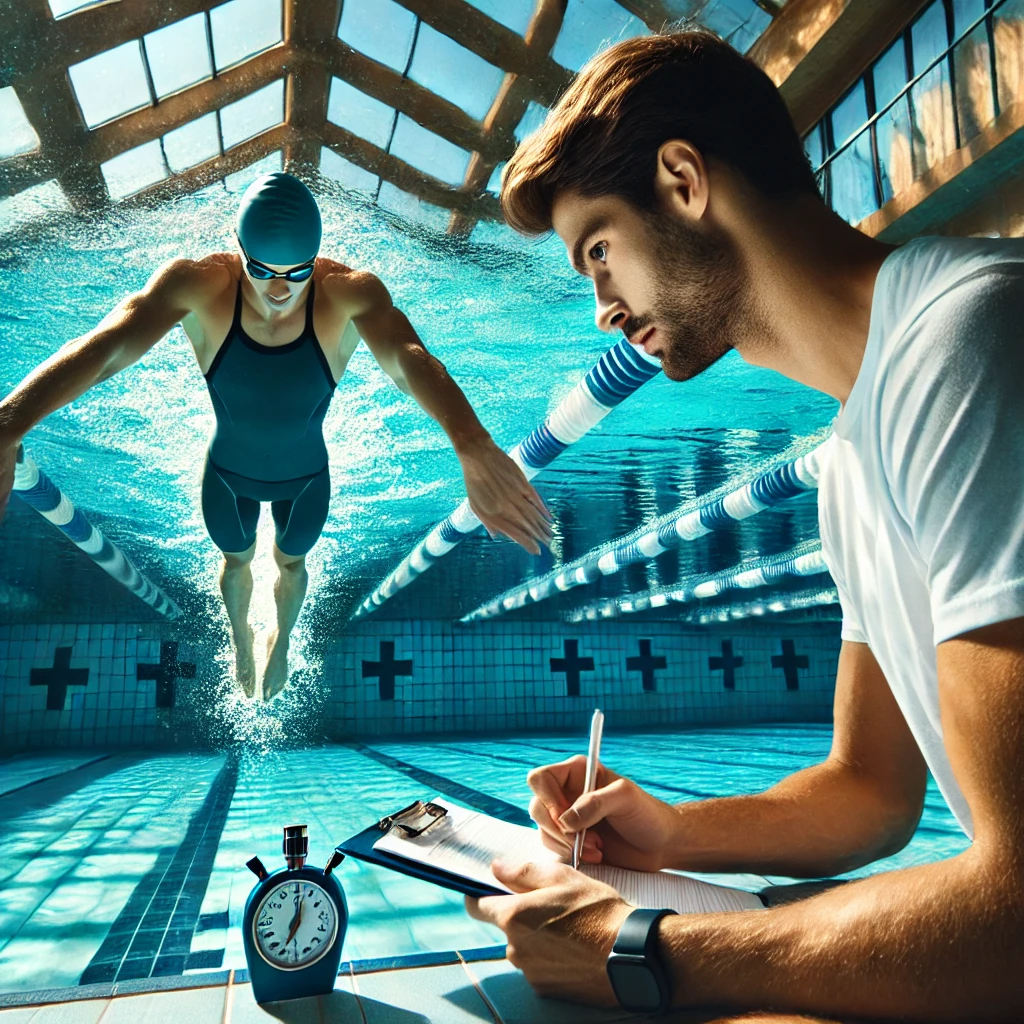
Recording swimmers and analyzing their strokes in slow motion helps identify inefficiencies and make precise corrections.
4. Mental Training & Race Strategy
A top strokes coach develops both the body and the mind.
Visualization: Imagining a perfect race builds confidence.
Pacing Drills: Learning when to conserve energy and when to sprint.
Pre-Race Routines: Developing strategies to reduce nerves and optimize performance.
Common Challenges & How to Overcome Them
Swimmers Plateauing in Speed
Solution: Introduce varied training, resistance tools, and technique drills.
Struggling with Breathing Efficiency
Solution: Teach controlled exhalation and proper head positioning.
Endurance Issues
Solution: Increase aerobic sets and integrate HIIT workouts.
Poor Turns & Finishes
Solution: Practice flip turns, streamline techniques, and explosive push-offs.
Conclusion: Elevate Your Swim Game
Competitive strokes coaching is about precision, power, and persistence. Whether you’re a coach fine-tuning an athlete’s strokes or a swimmer striving for personal bests, technique-driven training is the foundation of success.
So, which stroke are you looking to master next? Start implementing these coaching strategies today and take your swimming performance to the next level!
voters
Report Story 
Related Stories












Recent Stories